
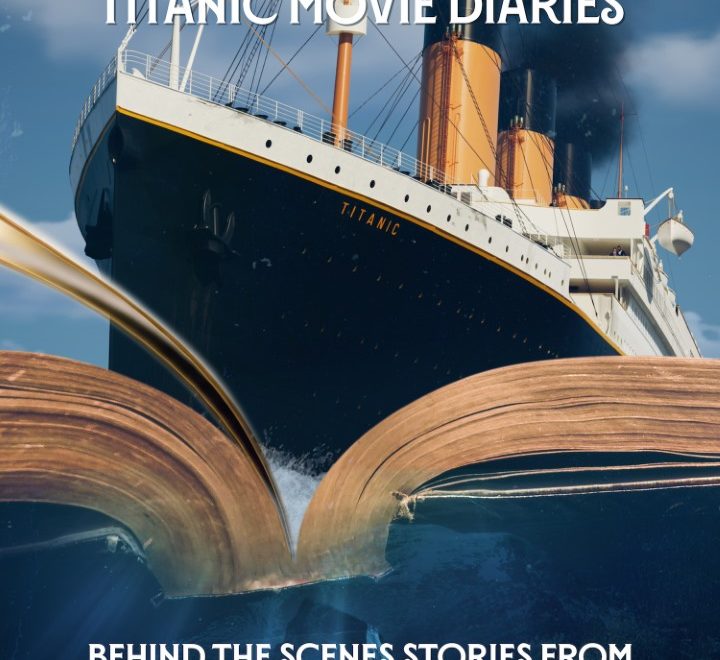
Produced for the 25th anniversary of James Cameron’s legendary film Titanic – though releasing closer to its 30th – this documentary explores the making and legacy of the film via an unusual gimmick: a number of background and supporting actors kept production diaries during the film’s notoriously painful shoot, and those actors are gathered onscreen all these years later to read from those diaries.
Obviously the documentary will most likely be of limited interest to those who aren’t “Titaniacs” – a fandom self-identifier used by a number of the interviewees herein, because aside from those peripherally involved with the production, we also hear from a number of seriously dedicated collectors, sharing their thoughts on the film’s impact, significance and legacy as well as, towards the end, actually getting to meet some of the actors featured.
It is in these moments that the film is at its most touching:
“But we’re not movie stars!”
[Beat]
“Of course you’re movie stars.”
…is an exchange between one Titanic superfan (and professional cinematographer) and an actress only a die-hard fan could ever possibly recognise. Extras, supporting artists, background, call them what you will – this is an unsung group of performers, and it’s touching to see them recognised here. I have to confess a vested interest here since I have, and continue to, perform as an extra on occasion, but still – when was the last time you saw extras interviewed or even acknowledged, really, on any kind of making of material? And for a production like Titanic, the dedication required is astounding. The excerpts we hear speak of 18-hour days, freezing winds, bruised hips and emotional trauma. There’s an honesty to much of this material that you wouldn’t expect to hear coming from the likes of Mr. Cameron, DiCaprio, or Winslet, or anyone else involved with the production to such a major extent. Nonetheless, it is difficult to avoid the conclusion, as we watch actors read aloud to us, that much of this material may have worked better were it presented in a book or one of those “oral history”-type long-form articles. We do get much footage from the film, which is occasionally useful for illustrative purposes – some of those profiled here had genuinely blink-and-you’ll-miss-it rôles – but it’s the occasional views of pieces of costuming or props that provide the main visual value.
We do, in fairness, get quite a lot of views of such materials because the documentary doesn’t deal only with the 1996-97 production of Cameron’s film, but, though its many interviews with devoted collectors, ends up speaking just as much to the film’s legacy; something that is now intimately tied up with the legacy of the historical “ship of dreams”, both enshrined as significant moments in our collective cultural history.