
If there was one thing Victorian civilisation loved, beyond going to other countries and finding cool shit to take home to the British Museum, it was interrogating the possibility of life after death. Oh fine, engineering marvels were pretty popular too. And child prostitutes. And very long novels. And importing baked beans from the United States. But spiritualism was a major craze, and even people who really ought to have known better, like Sherlock Holmes’ creator Sir Arthur Conan Doyle, were desperate to be played as suckers. Séances, automatic writing, and spirit photography were the orders of the day, and some, like the principal characters in The Gates, even attempted a scientific-rationalist application of such kooky, far-out rituals.
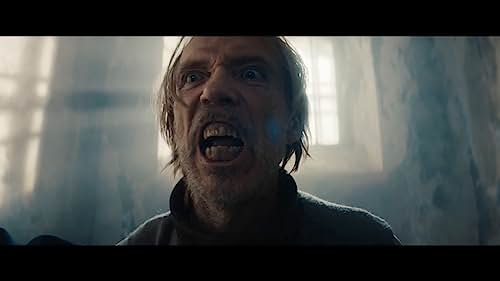
You see, there’s a haunting afoot. Great Britain, inspired by her rough-and-ready, yet forward-looking cousins across the Atlantic, has just held her first ever execution by electric chair. The victim surely deserved it, because it’s current Rob Zombie favourite Richard Brake (31, 3 from Hell) as yet another serial killer who is lewd, vile, unrepentant, and oddly magnetic – even sexy. Anyway, it seems when they cooked his goose, they didn’t cook it all the way, because his ghost continues to hang around and sort of pop up now and then to say “Boo!”. So, of course, they bring in photographer and amateur inventor Ladbroke (John Rhys-Davies) and his charming daughter Emma (Elena Delia), along with Lucian Abberton (Michael Yare), a sort of spiritualist detective in the mould of Carnacki. Ladbroke, incidentally, spends most of his days photographing corpses, a popular Victorian pastime also depicted in A Night of Horror: Nightmare Radio.
This probably all sounds like a recipe for some good old-fashioned pulpy fun, and it mostly is, the three principals making the most of their fairly delightful parts, Yare in particular. Richard Brake is, unsurprisingly, excellent, and his English accent surprisingly excellent, but his screentime totals less than five minutes. Perhaps he only had a couple of days in the UK or something. When The Gates works, it’s a lot of fun, and it’s a good reminder that “fun” doesn’t only mean the Insidious ghost-train formula, where things that go bump in the night predictably go bump in the night, every five minutes like clockwork. Most of the meat of The Gates is just people standing around a handsome Victorian prison, talking. In that sense, it gives off the feeling of a high-quality TV movie, and while the script is original, it’s easy to imagine this story coming from the pen of one of the great Victorian writers of ghost stories. Where The Gates mostly falls down in its repetitiveness and its tendency to draw out a setpiece to the point of diminishing returns. At 112 minutes, you may find yourself looking at your watch from time to time, or getting up to make a cup of tea and finding that precisely nothing has occurred while you were out of the room. This isn’t always a bad thing in films; there’s something to be said for just relaxing into the mood and rhythm of a particular scenario, a particular set of characters. But the impression would, ironically, be so much stronger and more memorable if there were less of it.