
★★★☆☆
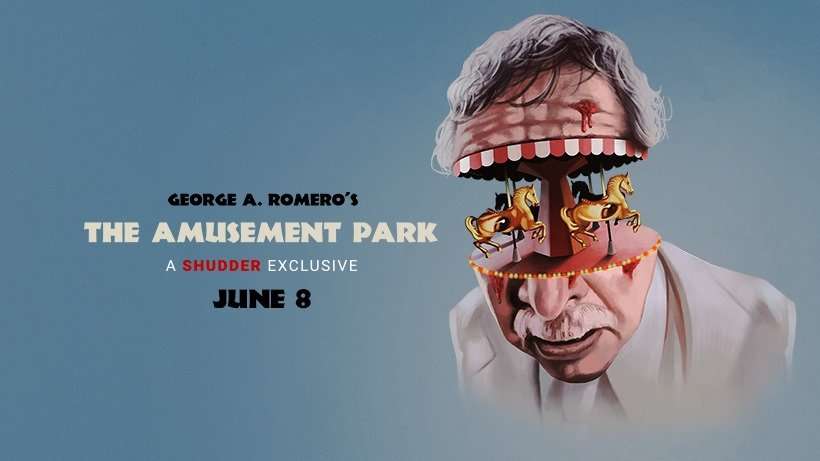
So, the most interesting thing about George Romero’s The Amusement Park is the bizarre story behind the film. Romero, still a young filmmaker with a number of commercials and educational and industrial films – as well as Night of the Living Dead, Season of the Witch and The Crazies, plus the odd-one-out arthouse film There’s Always Vanilla – under his belt, set out to make probably his most ambitious, and certainly his oddest, horror film. A local Lutheran church wanted to make a public service film that would basically say, “Hey. Old people are still people. Don’t ignore them or mistreat them, and try to be patient when they get confused.”
So off goes Romero with that brief, a camera and a boom mic, $37, 000 and three days of shooting time in a Pennsylvania amusement park. The 50-minute film that resulted was shown only a handful of times – likely proving too surreal and nightmarish to make for good church viewing – and was lost until 2017, whereupon it was restored and finally released.
So is The Amusement Park actually any good? Yes, though it’s probably interesting mostly for historical reasons. If you enjoy the on-the-nose social commentary that’s all over Dawn and Day of the Dead, then good news, because there’s plenty of it here. If you like how off-kilter Night of the Living Dead and Martin are, well then you ain’t seen nothing yet. And if you’ve been enjoying the pretentious recent coining of “elevated horror”, you may be interested to see how far back that tradition goes.
Actor Lincoln Maazel – who played the would-be vampire hunter in Martin, and who lived to the age of 106, dying in 2009 – introduces the film as himself. “Here’s what you’re about to see, and here are some issues that you may wish to consider while watching”, that sort of thing. Then we see Maazel playing a confused, bruised and bloodied old man in a featureless white room, talking to his non-battered doppelgänger, who is insistent that he leave the white room. Next thing, we get to see Maazel essentially stumble through a number of bizarre, amusement-park-based setpieces of ignorance and cruelty. Romero’s signature sense of the satirical is in evidence, and around two-thirds of the way through the film is a digression about the state of housing in Pittsburgh. If that sounds appealing to you, then you probably know already whether this film’s for you.