
★ ☆ ☆ ☆ ☆
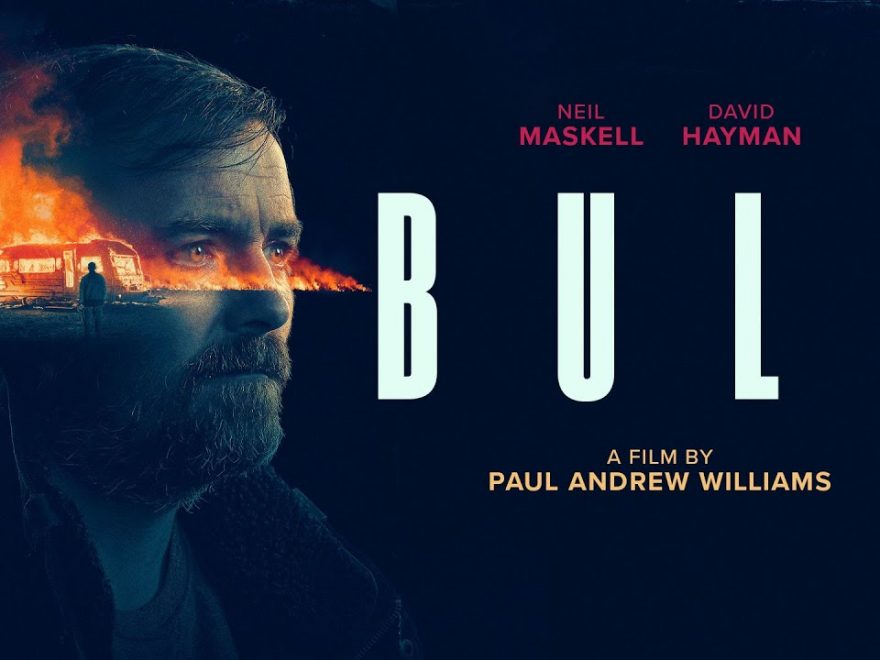
Bull is a nasty little film; its protagonist, also called Bull, is a nasty little man.
Constantly angry, never more than a few seconds from an act of brutal violence, and seemingly channelling Ross Kemp by way of Ricky Gervais, Neil Maskell’s Bull is on a single-minded, bloody-minded quest to protect his son from evil, which in this case includes dealers, junkies, sluts, Scots – everyone, essentially. Bull is one of those films so misanthropic that nothing in it even registers as creepy, vile, or gross.
Bull, the character, is weighed down by the suffering inherent to living in a world as ugly as that of the film (not only morally: settings include a greasy spoon, an abattoir, someone’s back garden, a caravan, a dingy pub, and a crappy funfair that inexplicably serves as the setting for about half the scenes). Bull, the picture, meanwhile, is weighed down with a confusing, not to mention unnecessary, structure which jumps around within the story’s chronology, on seemingly no better logic than “Tarantino does this sometimes”; and a number of plotholes which are rather dubiously explained away in the last two minutes of the film with one of the silliest twists you’ll have seen in a while. Actually, Tarantino isn’t the best comparison at all; it all plays out more like a brainless version of Ben Wheatley. The argument may be that films like this aren’t supposed to win Oscars; surely, though, they’re at least meant to win fans-?
Still, if after all that, you still just crave Brit thug flicks SO much that you still fancy giving Bull a look, then you might find that among its meagre pleasures are an intimidating turn by character actor David Hayman, a commendable performance by child actor Henri Charles (who was, per IMDb, Ricky Mitchell in 96 episodes of EastEnders), and some seriously excellent gore effects, especially on such a limited budget.